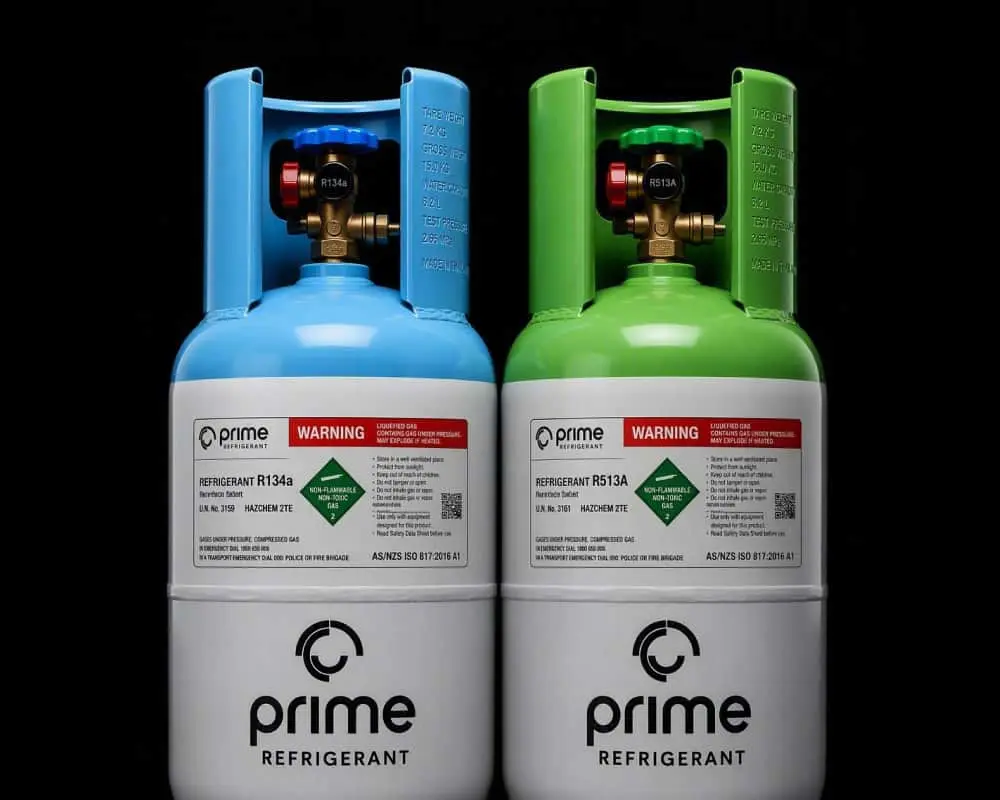
Low GWP refrigerant alternatives: Comparing replacement options
As the refrigerant landscape continues to evolve, contractors and asset owners are increasingly looking at lower GWP (Global Warming Potential) alternatives to traditional HFC (hydrofluorocarbon) refrigerants. While refrigerants such as R134a remain available today, the ongoing transition towards lower GWP options means it's important to understand the alternatives available and how they compare. For many existing systems, lower GWP refrigerants provide a practical pathway to extend equipment life while reducing environmental impact. But not every option performs the same, which is why understanding the differences is critical.
Why are low GWP refrigerants becoming more important?
The refrigeration industry is transitioning away from higher GWP HFC refrigerants and towards lower GWP alternatives. GWP measures the impact a refrigerant can have on the atmosphere if released. Refrigerants with higher GWP values contribute more to global warming, which is why many markets around the world are progressively reducing their use. While HFC refrigerants are not disappearing entirely, the industry is shifting towards lower GWP versions that deliver similar performance with a reduced environmental footprint. For contractors, understanding these alternatives can help future-proof recommendations and support customers looking to maximise the life of their existing equipment.
What are low GWP refrigerant alternatives?
Many modern lower GWP refrigerants are blends of HFC and HFO (hydrofluoroolefin) refrigerants. HFO refrigerants have an extremely low GWP, while the HFC component helps maintain operating characteristics similar to the refrigerant being replaced. When combined, these blends can provide a balance between performance, safety and environmental benefits. In many retrofit applications, this allows existing systems to continue operating with minimal changes, provided compatibility and system suitability have been properly assessed.
Comparing R134a and R513A
One of the most common low GWP refrigerant comparisons is R134a versus R513A. R513A was developed as a lower GWP alternative to R134a and is designed to deliver similar operating characteristics in many existing systems.
Refrigerant comparison
ASHRAE No. | R134a | R513A |
Brand name | R134a | Opteon™ XP10 |
Refrigerant type | HFC | HFO/HFC blend |
GWP (AR4) | 1430 | 629 |
Temperature glide | 0°C | 0°C |
Safety classification | A1 (non-flammable) | A1 (non-flammable) |
As you can see in this table, R513A produces less than half the GWP.
What is temperature glide?
When comparing refrigerants, you'll often see temperature glide referenced in technical documentation. Temperature glide refers to the temperature change that occurs as a blended refrigerant evaporates or condenses within a system. Systems with glide also suffer from fractionation. Meaning if a leak occurs, the different components of the blend can escape at different rates, altering the refrigerant composition and making it impossible to accurately top up. A refrigerant with zero glide behaves similarly to a single-component refrigerant, making charging, servicing and system performance calculations more straightforward. Both R134a and R513A have zero temperature glide, helping simplify retrofit considerations and system operation.
Why is R513A often recommended?
R513A is widely regarded as one of the strongest lower GWP alternatives for R134a applications. There are several reasons why it continues to gain industry acceptance.
Lower environmental impact
The GWP of R513A is less than half that of R134a. This reduction helps support the industry's transition towards lower impact refrigerants while helping preserve future refrigerant availability.
Similar performance characteristics
One of the key advantages of R513A is its ability to deliver performance that closely resembles R134a in many applications. This can help reduce the performance compromises that are sometimes associated with refrigerant retrofits.
Cooling capacity
Energy efficiency
Operating pressures
Suitable for use with POE oil
Works with R134a TX valves
System performance
Non-flammable classification
Safety classification is an important consideration when evaluating refrigerant alternatives. R513A retains an A1 safety classification, meaning it remains non-flammable, just like R134a. This can simplify retrofit decisions in applications where an A1 refrigerant is preferred or required.
Supports equipment life extension
Where equipment remains mechanically sound, transitioning to a lower GWP refrigerant can be a cost-effective alternative to complete system replacement. Retrofitting to a refrigerant such as R513A may allow businesses to continue operating existing assets while aligning with evolving refrigerant requirements.
Is R513A a direct replacement for R134a?
While R513A has been designed as an alternative to R134a, all refrigerant changes should be assessed as retrofit projects rather than simple replacements.
Equipment compatibility
Lubricant requirements
Expansion device suitability
System operating conditions
Manufacturer recommendations
A proper assessment helps ensure performance, reliability and compliance requirements are maintained.
The bottom line
As the refrigeration industry continues moving towards lower GWP solutions, understanding replacement options has become increasingly important. For many R134a applications, R513A offers an attractive balance of lower environmental impact, similar operating performance and non-flammable characteristics. When system suitability has been confirmed, it can provide a practical retrofit pathway that supports both equipment longevity and future refrigerant availability.
Looking for more refrigerant comparisons? Ask your local ACTROL team for a Prime Refrigerant Comparison Chart or explore our refrigerant range and technical resources for additional guidance on selecting the right solution for your application.
Share